he incident was not subtle. Wang Shipeng, the former national team midfielder known for his combative style, confronted Fan Zhiyi, the iconic captain of the 2002 World Cup squad, during a televised football talk show. Voices rose, microphones caught the edge in Wang's tone。and the studio audience shifted uncomfortably. What began as a tactical debate spiraled into a raw, personal rebuke—Wang angrily confronting Fan over what he perceived as outdated criticism of the current generation. I watched the clip three times. Each viewing made the friction more palpable: two men who once wore the same jersey, now separated by a gulf in football philosophy and generational pride. Wang Shipeng angrily confronts Fan Zhiyi—that headline circulated for days, but the confrontation itself was less about a single argument and more about a fault line that has been cracking for years.
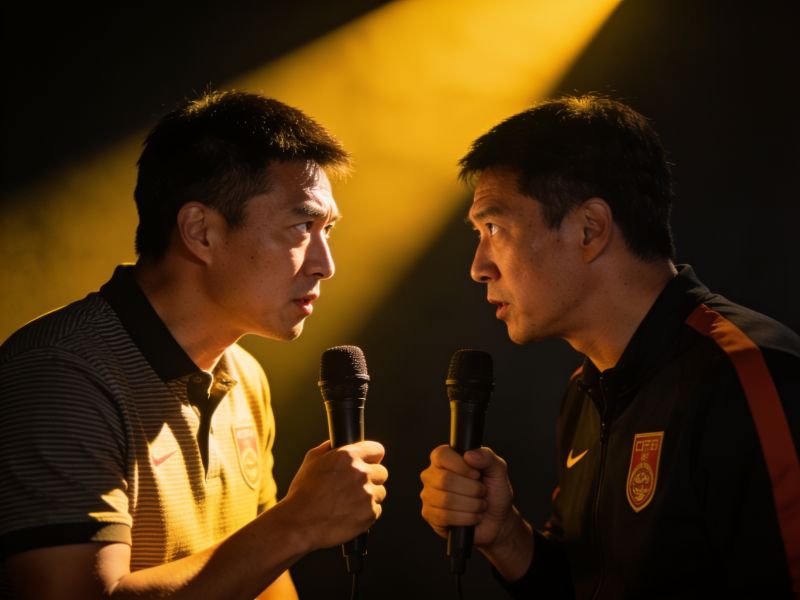
Fan Zhiyi, a defender of almost mythic stature in Chinese football。has never been shy about voicing his opinions. His critiques of modern players—their fitness, their tactical discipline, their perceived lack of hunger—have become a staple of his punditry. Wang Shipeng, who earned 55 caps between 2005 and 2011, took exception. In the heat of the exchange, Wang pointedly reminded Fan that the game has changed—sports science, data analysis, the sheer pace of modern football—and that blanket condemnations of today's players ignore those shifts. He didn't raise his voice to shout down Fan;he raised it to be heard over decades of unchallenged authority. That distinction matters. When Wang Shipeng angrily confronts Fan Zhiyi, he wasn't just defending himself or his peers—he was questioning the reflexive nostalgia that often masquerades as analysis in Chinese football commentary.The confrontation drew immediate reaction. Social media split along generational lines: older fans defended Fan's right to criticize, while younger supporters applauded Wang for pushing back against what they see as patronizing rhetoric. Former teammate Li Tie, in a separate interview。called the exchange "uncomfortable but necessary." A sports editor I spoke with in Shanghai described it as "the first time someone of Wang's generation publicly refused to bow to the old guard on air." That refusal carries weight. For years, the hierarchy within Chinese football's commentariat has been rigid: World Cup veterans speak, and others listen. Wang Shipeng angrily confronts Fan Zhiyi—and in doing so, he disrupted that hierarchy, even if only for a few tense minutes.What gets lost in the noise is the substance. Wang's core argument—that Fan's criticisms often lack granularity—has merit. Fan has a tendency to generalize: "These players don't run enough," "They lack fighting spirit." Such remarks resonate with fans frustrated by poor results, but they rarely withstand scrutiny when matched against match data. Wang, who now works as a coach and analyst, countered with specifics: distance covered, sprint counts, tactical adherence in recent Asian Cup qualifiers. The numbers don't tell the whole story, but they complicate the narrative Fan has been selling. That Wang angrily confronts Fan Zhiyi on live television is notable;
that he did so with evidence。not just emotion, is what gives the moment lasting significance.The episode will fade from headlines, but its residue won't. Chinese football is in a transitional moment—old certainties are being questioned, new voices are demanding space. The confrontation between Wang Shipeng and Fan Zhiyi is a symptom of that transition。
a visible crack in the edifice of authority that has long shaped how the game is discussed. I don't think either man emerged as a villain. Fan's passion for the game is genuine;Wang's frustration is legitimate. But the exchange exposed something uncomfortable: the gap between those who played in 2002 and those who played a decade later is not just about era—it's about how each side understands accountability, evidence, and respect. Wang Shipeng angrily confronts Fan Zhiyi, and in the aftermath, the question lingers: can Chinese football's discourse move beyond deference and embrace genuine debate?