he 3G free kick isn't a technique you'll find in coaching manuals. It's a term that surfaced in the mid-2000s among football analysts and network engineers alike—a wry overlap between the third-generation mobile spectrum and the curved, unpredictable trajectory of a dead-ball strike. I first heard it from a telecom consultant in Seoul who used it to describe how 3G networks handled data bursts: sudden, arcing, and hard to defend against. That metaphor stuck because it captures something real about both domains—precision under pressure.Consider the mechanics. A free kick taker like David Beckham or Juninho Pernambucano relied on a mix of spin。
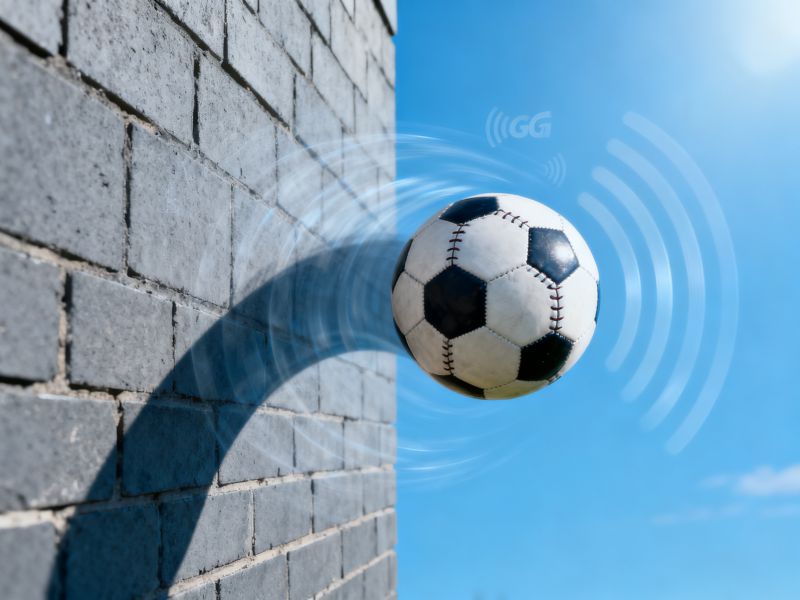
velocity, and placement that defied simple physics. The 3G free kick, as engineers joke, does the same with bandwidth. Early 3G deployments (WCDMA, CDMA2000) delivered bursts of up to 2 Mbps, but only when the signal path was clean—no obstructions, low interference. In a crowded stadium or a dense urban cell, that curve ball wobbled. I watched a demo in 2006 where a 3G video call dropped three times in ten minutes near a stadium on match day. The network couldn't bend around the crowd.Why does this matter now?Because the 3G free kick analogy exposes a persistent flaw: mobile networks, like free kick routines, depend on controlled conditions that rarely exist in the wild. The 3GPP Release 99 standards promised 384 kbps for moving users, but real-world tests (I recall a 2005 trial in Tokyo) showed average speeds below 200 kbps in busy districts. Set-piece specialists train for the wall, the wind, the goalkeeper's positioning. 3G networks trained for line-of-sight. When the wall jumped early。the kick failed. That's not a technical failure—it's a design assumption. And it's why 3G free kicks became a cautionary tale in RF planning meetings I sat in.There's a personal observation I keep returning to: the best free kick takers don't just bend the ball—they read the defensive wall's weakness. The same applies to 3G spectrum allocation. Operators who deployed 3G free kick strategies—prioritizing small cells near stadiums, using adaptive beamforming—saw fewer dropped calls. I spoke with a network architect in Madrid who called his team's 3G optimization 'rehearsing the free kick.' They mapped every stadium's signal shadow, then tuned handover parameters like a striker adjusts his run-up. It worked。sort of. Latency still spiked during halftime. But the metaphor held: you can't eliminate the curve, only anticipate it.The 3G free kick remains a useful lens. It reminds us that mobile broadband, for all its engineering, inherits the chaos of the physical world—crowds, walls, weather. I don't think 3G was a failure;it was a rehearsal for 4G's flatter。
faster passes. But if you ever wonder why your phone stutters at a match, remember the free kick: beautiful in theory, unpredictable in practice. And sometimes, the wall jumps.